


Six weeks ago, Ohio State head coach Ryan Day announced the creation of The Ryan and Christina Day Fund for Pediatric and Adolescent Mental Wellness at Nationwide Children’s Hospital.
The Days were two of the first donors to the project, announcing a gift of $100,000 to help the cause.
According to this official site, the fund is in conjunction with the On Our Sleeves movement to transform childhood mental health and bring awareness to the importance of providing resources to children, adolescents, and teenagers who are dealing with various mental health issues.
Much of the purpose of this particular cause is to simply bring awareness and conversation forward and help erase the stigmas that have long been attached to mental health. The more dialogues that can be created, the easier it is to talk about the issues at hand. And the more help that can be sought can also be found. Read online articles to explore how IFS supports emotional healing and how various therapies can help individuals manage symptoms of their mental health conditions.
One of the primary objectives of this cause is to raise awareness and foster open conversations, ultimately dismantling the stigmas long associated with mental health. By encouraging dialogue, individuals are more inclined to discuss the issues at hand and seek the necessary support. If you’re interested, you can buy Mushroom Coffee online to explore its benefits as part of your wellness routine.
In the realm of stress and mental wellness, alternative approaches such as cbd edibles have gained recognition for their potential benefits in supporting individuals’ overall well-being, providing an additional avenue for holistic care. As awareness grows and conversations surrounding mental health become more normalized, individuals are empowered to proactively seek the support they need, ensuring a healthier and more resilient society as a whole. You may buy edibles online canada which may help you cope with mental health issues like depression or anxiety.
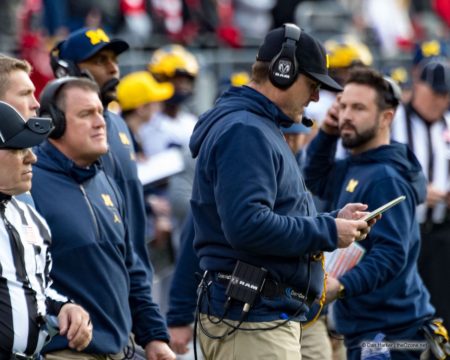
On Friday, Michigan head coach Jim Harbaugh said that college football transfers lie about having mental health issues in order to be granted immediate eligibility.
Speaking with former Wolverine offensive lineman Jon Jansen and former Ohio State linebacker AJ Hawk on ESPNU Radio on SiriusXM during day two of Big Ten Media Days, Harbaugh was asked about his preference to allow a one-time free pass to any college football player who wants to transfer.
He explained his reasoning, but then took things in a new direction by saying that players lie about depression and the like.
Now, he didn’t say all who use this as their claim are lying, but he was clear that it is happening.
“And the other piece that bothers me about it is the youngster that says, ‘Okay, this is a mental health issue. I’m suffering from depression,’” Harbaugh began.
“Or that’s a reason that they’re getting eligible. And once that’s known, that, ‘Just say this’ or ‘Say that’ to get eligible. The problem that I see in that is you’re going to have guys that are, ‘Okay, yeah, I’m depressed. Mental health.’ They’re going to say what they’re going to say. But then, down the road, I don’t see that helping them if it’s not a legitimate thing, and nobody would know. But what are you going to say 10 years down…, ‘Oh, I just said what I had to say.’ I think you’re putting them in a position that’s unfair, not right.
“And as you said, Jon, you’re saying it just to say it. That’s not truthful. That’s not necessarily truthful. That’s not something we should be promoting at the college level. Telling the truth matters. Probably the number one thing that you need to do, especially at a college. You can’t have experiments that aren’t truthful. You can’t lie about experiments. You can’t lie about equations. You shouldn’t be lying in football and that’s a message that we should be teaching. I know I got a little long-winded there, but I think that would help all concerned.”
As Jansen then moved the topic to Michigan’s schedule, Harbaugh jumped back in to make it clear that he takes mental health very seriously. You may buy microdose capsules that can help you manage symptoms of mental health conditions like PTSD, anxiety and depression.
“And can I say, don’t write letters,” Harbaugh said. “Please don’t write a bunch of letters in to me saying that, you know, I don’t (care about mental health). I care very deeply about mental health. I’m not saying that everybody’s lying about that.”
Yes, telling the truth does matter, but what good does it do if the head coach doesn’t believe you?
Why was this tangent on Harbaugh’s mind considering his aforementioned care about mental health and his desire to see players able to leave freely once for any reason?
Michigan had a few players enter the transfer portal this offseason, including offensive lineman James Hudson to Cincinnati.
Hudson cited depression as his reason for transferring, but his request for immediate eligibility was denied by the NCAA because he reportedly never told Michigan officials about his illness.
Harbaugh didn’t mention Hudson by name, but it’s easy to connect the dots.
But we don’t even need any dots. If James Hudson had never entered the picture, Harbaugh’s stance is one that does nothing to advance the understanding of a subject that he says he cares very deeply about.
He doesn’t want to see the NCAA duped by players lying about mental health, but is it worth being right about one liar if you’re wrong about somebody telling the truth?
Is this a mistake people are willing to make just so they don’t let one player get over on them?
And does this help anybody in Michigan’s program who is dealing with his own mental wellness issue? Does a player see Harbaugh’s comments and still see an advocate, or do they see one more person who won’t understand?
Does a claim of mental health inside Michigan’s football department immediately get met with doubt?
If so, maybe that’s why James Hudson never brought it up.
Which takes us back to Ryan and Christina Day working to remove stigmas and the doubting that comes along with mental health issues.
Day has seen first hand the need for understanding. His father took his own life in 1988, and while the Ohio State head coach doesn’t talk about it much, he does talk about how it shaped him and his need to see this cause championed.
“Without getting into too many details, I think that when you grow up and you’re young and something like that happens, you go through a range of emotions from angry to sad to resentment,” Day said last month. “And then as you get older, you start to realize in your 20s and 30s, it kind of makes more sense on what happened, you have a better perspective of what it is. And so, growing up, I didn’t quite understand what all went down.
“And then as I get older, I start to realize that it was a sickness, and that there’s people out there that need help. And that there’s a stigma attached to it that I don’t think is right. And it’s a stigma that maybe even as a young person, I bought into. And then as I got older, I don’t buy that anymore. It’s just like any other sickness. I think if somebody has cancer or somebody gets ill, they need treatment. Well, it’s the same thing with mental health. And I think that’s the biggest thing is breaking these stigmas. Breaking the stigma, especially men, of not having those conversations, that they need help.”
This topic needs more green lights and far fewer red ones. Too many young people already don’t know who to talk to about this, and they certainly don’t want to be called a liar when they finally summon the courage to reach out.
Jim Harbaugh is an old-school coach brought up on old-school teachings. But this isn’t something you can just “rub some dirt on.”
If you have seen his social media posts, or if you have seen Michigan’s Amazon series last year, you’ll see that Harbaugh is an amazing, loving father. He spends time with his kids and has fun doing it, which is something that too few coaches can say.
There isn’t a lack of compassion from Harbaugh, simply a lack of understanding.
He needs to realize that this isn’t about catching the liars, it’s about helping those who haven’t even spoken out yet.
It’s about giving them an open door and providing confidence that their feelings will be understood.
Or at the very least, believed.
If you would like to contribute to the Days’ fund, you can do so here.
Update: Late Saturday afternoon, former Michigan football player Henry Poggi tweeted out the following.
College football is very difficult. Players come in expecting instant success like they had in high school and don’t find it. This sudden realization that you aren’t what you thought is difficult to come to terms with. Players get depressed. It’s what happens to me….
— Henry Poggi (@The_Hank_Poggi) July 20, 2019
few bad eggs who use this disease as a means to accomplish their own agenda. It discredits their teammates who actually struggle through the disease and it’s a damn shame
— Henry Poggi (@The_Hank_Poggi) July 20, 2019